A Closer Look at the Occupational Life Skills Program
We often speak with profound pride when we talk about our Occupational Life Skills Program, and the reason is simple: the transformations we witness here are not abstract or theoretical. They are visible. Tangible. Life-changing. For many of our clients, the OLS Program is an advancement of years of therapeutic work evolving into something new: independence, responsibility, and the confidence to take up space in the world.
On average, a client works with Partners for Progress for seven years. That means we spend countless hours watching goals unfold, slowly at first, then steadily, then suddenly. We witness breakthroughs that begin with a shaky hand on a rake or a hesitant greeting to a peer and end with a confident voice calling out instructions, or a team collaborating without needing reminders. There is something incredibly moving about the moment a participant steps into the OLS Program. It is a turning point in which isolation begins to dissolve, and autonomy begins to rise. It’s the moment when clients shift from being cared for to contributing, from receiving support to giving it. And that shift is not small. It is profound.

Where Therapy Meets Real-World Meaning
Growth within the Occupational Life Skills Program is not theoretical; it is real, measurable, and deeply human. Each participant begins from a different starting point, carrying individual strengths, challenges, and goals, which means every objective is tailored, adapted, and refined to help them reach their fullest potential. That level of individualized care and clinical creativity is what sets this program apart; it is dynamic because our clients are dynamic, and it adapts because true progress requires adaptation.
What makes OLS so extraordinary, especially in a world that is becoming wildly digital, is that it merges therapeutic principles with real, purposeful work. Instead of practicing skills in a controlled clinical setting, our participants learn by doing: caring for the barn that houses our herd, greeting guests and practicing working as a team, crafting items for the OLS Market, and managing daily responsibilities that matter.

Tasks are not symbolic. They are functional. They require planning, decision-making, sequencing, interpersonal communication, and perseverance. When a participant completes a task, it is not to earn a sticker or pass a test. It is to contribute to a real environment and see the direct impact of their effort. And in that impact, confidence takes root.
The work itself becomes a teacher. We see executive functioning develop not through worksheets, but through practicing and prioritizing. We see self-regulation strengthened not through lecture, but through navigating frustration when a task is hard or a craft needs to be redone. We see social participation bloom not through prompts alone, but through peers taking initiative and saying, “Let’s do this together.”
Growth You Can See, Hear, and Feel
If you walk into the OLS Program on any given day, you might see Nia bent over a task, her brows knit in concentration. There was a time when her attention drifted easily, interruptions scattered her focus, and prevented her from reaching closure on tasks. But now she pauses, breathes, redirects, and finishes. What looks like focus to an outsider is actually the result of strengthened attention, improved impulse control, and an emerging ability to self-monitor. It is one of the most powerful steps toward independence.
A few feet away, Evelyn might be gently and confidently encouraging a friend, “You’ve got this. We’re almost done.” Leadership was not assigned to her. It surfaced naturally as she developed emotional maturity, social awareness, and the ability to motivate not only herself, but others. She is learning the responsibility and humility that come with guiding peers while also balancing her own goals.
In the barn aisle, you may see Elin trying something new, a task she might once have resisted, and you would never know how hard that skill was to build. Flexibility does not arrive overnight. Tolerating new routines, novel stimuli, and unexpected changes requires courage, trust, and repetition. Each day she chooses to adapt is a victory over the fear of “what if.”
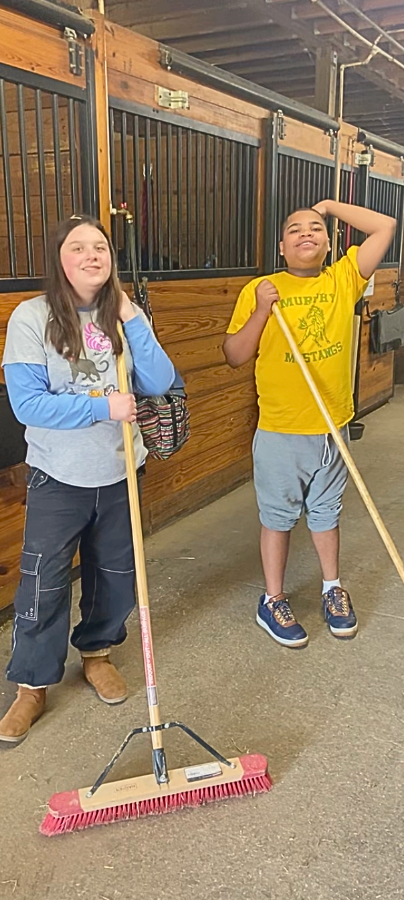
Then there is Max, who stands as an example of internal growth. He is learning self-awareness: to pause and ask himself, “What am I feeling, and what do I need right now?” This reflective ability is subtle, but it is transformational. It is the difference between shutting down and advocating; between being directed and becoming self-directed.
When the day is hard, that is where Kelsey’s work and practice shine. She is learning emotional regulation not through theory, but through lived experience. She is practicing coping strategies, grounding techniques, and resilience that will serve her far beyond the barn. Her success is not just finishing a task, but facing difficult moments with courage, ending the day strong, and trying again tomorrow.
You may even hear Sean demonstrating meaningful self-advocacy. Like recently, when he noticed the goats’ enclosure had been cleaned in a way that disrupted his system, he didn’t shut down or simply redo the task. Instead, he proposed a solution, creating a clear sign with instructions, and initiated a respectful conversation with his instructors to improve the process for himself.

These are only a few examples of the extraordinary moments we witness, and only a few of the members who participate in the OLS Program. There are countless others, and these are not small accomplishments. They are the building blocks of independence, dignity, and identity.
A Place Where Friendship and Purpose Intersect
Something equally beautiful happens in the OLS Program: connection.
We have watched friendships form in this environment that were once considered improbable or impossible. Clients who once struggled with social reciprocity now laugh together, share tasks, and support one another when challenges arise. The barn becomes more than a workplace; it becomes a community.
For example, one member could be struggling with a task, and another will provide encouragement and hold them accountable to finish, so they can say, “I completed my work.” This reiterates a feeling of accomplishment and confidence for the next time they need to tackle a challenging task. Or sometimes, this means a participant recognizes their friend needs space, which sparks their own social-emotional awareness, strengthening their own inhibition.
Purpose becomes social. Effort becomes shared. Celebrations become collective. For many, it is the first time they feel part of something larger than themselves.

The Market: Pride Made Visible
The OLS Market has become a hugely influential staple of the program. Every item represents more than craftsmanship. It represents planning, motor coordination, tolerance, teamwork, and pride.
When someone donates for an item, they are not buying a craft. They are validating a person.
That validation is priceless. It says: “I see you. I value your work. You belong.” And for a population that often faces exclusion, belonging is transformative.

Why This Matters, Especially Now
All of this, the growth, the confidence, the friendships, the pride, is not guaranteed. It exists because people believe in this program and support it.
Giving Season is not just a fundraising term for us. It is the moment when we ask our community to help ensure this program remains accessible and that more clients can enroll in 2026. It ensures materials and tools remain available and that our therapists can continue adapting goals. It allows our market to continue growing, and our clients can continue learning skills that translate to real-world independence
A donation to Partners for Progress is not abstract. It becomes a coping strategy. A leadership moment. A completed task. A friendship. A future.


Comments